Articles
Back
Red Oak vs White Oak: Which One Should You Specify?
Both Red Oak and White Oak command attention in contemporary design, but understanding their fundamental differences determines whether your specification elevates or compromises the work.
We manufacture with both species extensively. Here's what matters.
Four critical differences
Colour
Cell Structure
Grain Pattern
Price
Colour
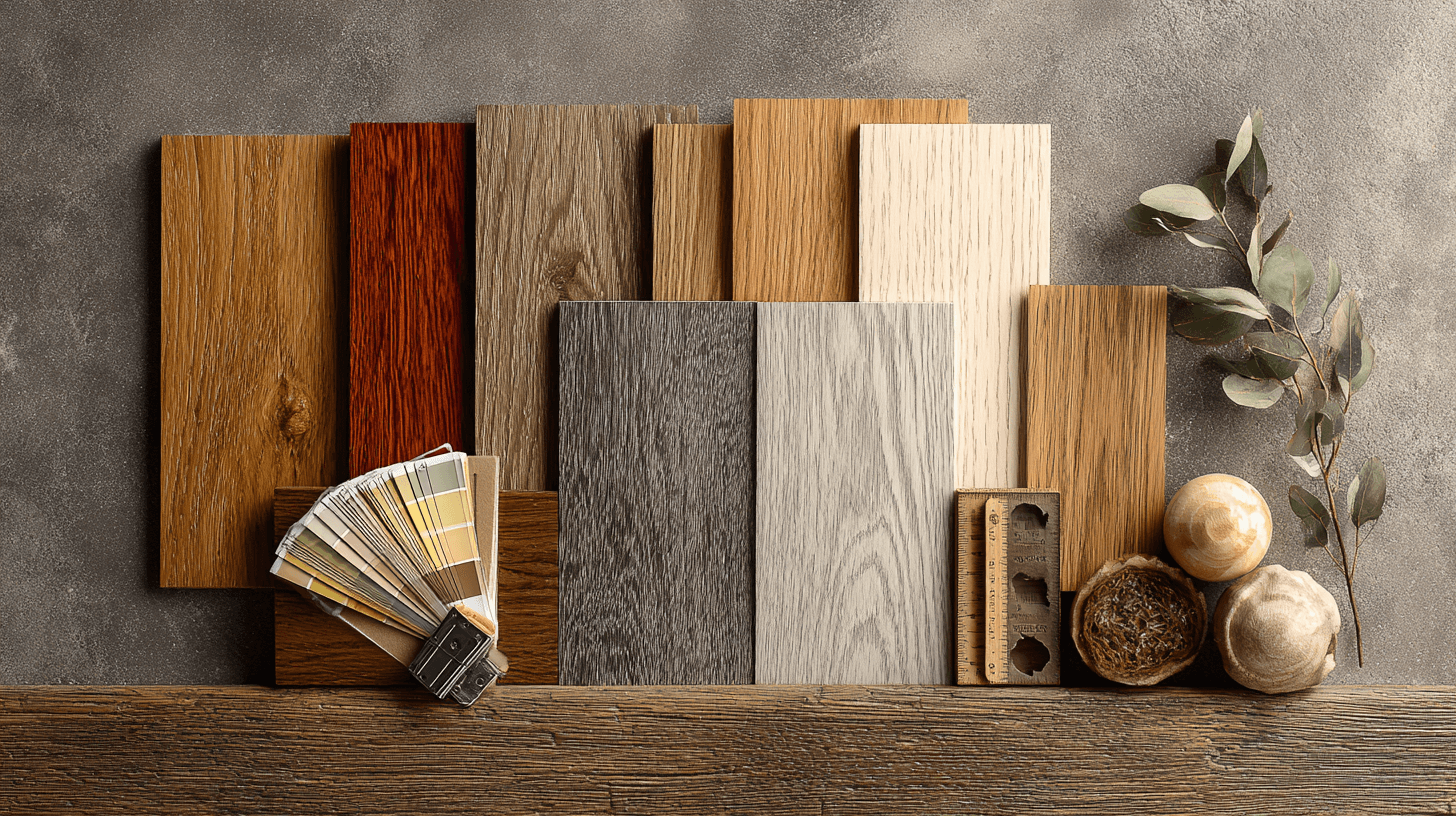
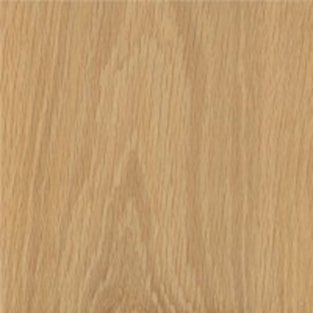
Red Oak carries a characteristic pinkish undertone—lighter overall with warmth that persists even under stain. White Oak presents as a mix of browns and tans, from dark chocolate to beige, with inherent caramel tones that accept darker finishes more readily.
Both Red Oak and White Oak command attention in contemporary design, but understanding their fundamental differences determines whether your specification elevates or compromises the work.
We manufacture with both species extensively. Here's what matters.
Four critical differences
Colour
Cell Structure
Grain Pattern
Price
Colour
Red Oak carries a characteristic pinkish undertone—lighter overall with warmth that persists even under stain. White Oak presents as a mix of browns and tans, from dark chocolate to beige, with inherent caramel tones that accept darker finishes more readily.
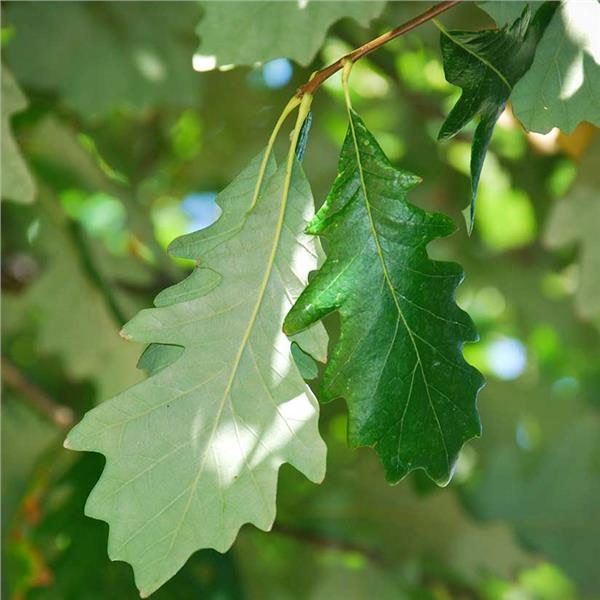
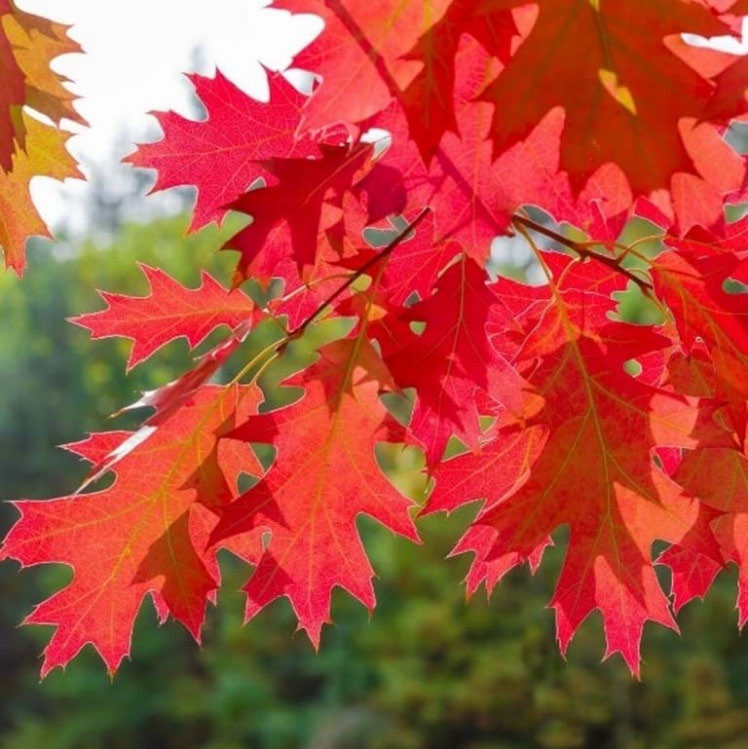
The distinction matters when staining. The same colour applied to both species produces notably different results—darker on White Oak, with warmer undertones. Light stains and whitewashes on Red Oak retain that distinctive pink cast.
White Oak's natural colouring varies considerably between boards—an important consideration for large installations where consistency matters.
The distinction matters when staining. The same colour applied to both species produces notably different results—darker on White Oak, with warmer undertones. Light stains and whitewashes on Red Oak retain that distinctive pink cast.
White Oak's natural colouring varies considerably between boards—an important consideration for large installations where consistency matters.
Cell structure
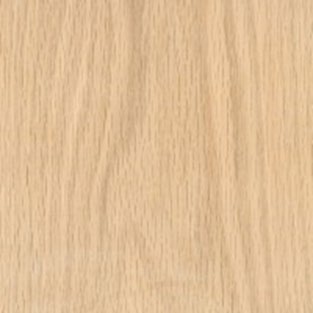
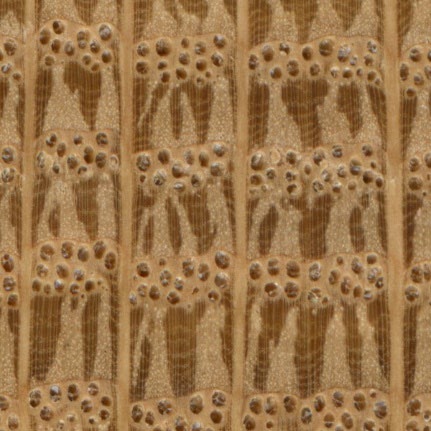
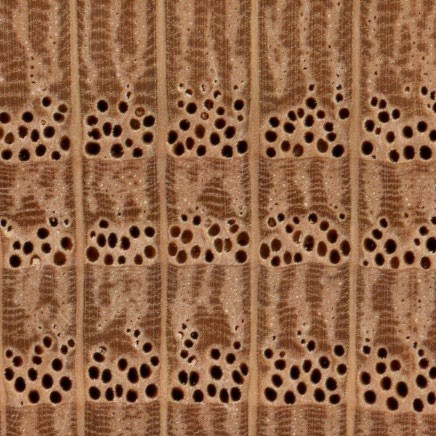
Red Oak's porous, open grain structure accepts stain with exceptional evenness—a significant advantage for uniform colour application. This porosity means greater dimensional movement, which we account for in joinery detailing.
White Oak's closed-pore cell structure provides superior rot and decay resistance. In Europe and North America, this makes it suitable for exterior applications. Australia's humidity demands different specifications—we can advise on appropriate outdoor timbers for local conditions.
Cell structure
Red Oak's porous, open grain structure accepts stain with exceptional evenness—a significant advantage for uniform colour application. This porosity means greater dimensional movement, which we account for in joinery detailing.
White Oak's closed-pore cell structure provides superior rot and decay resistance. In Europe and North America, this makes it suitable for exterior applications. Australia's humidity demands different specifications—we can advise on appropriate outdoor timbers for local conditions.
Grain pattern
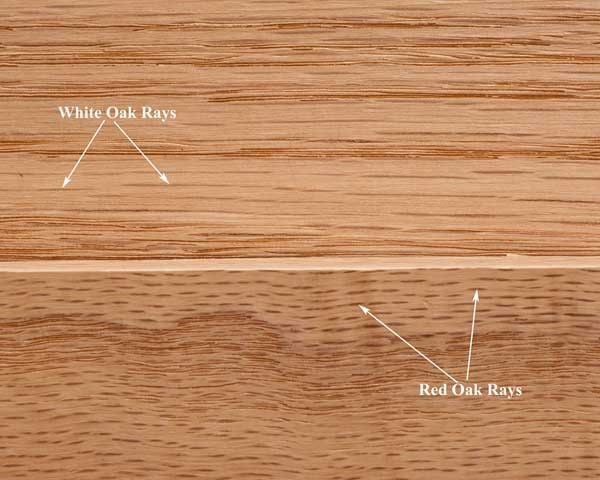
Red Oak's grain runs wilder—wider lines in zigzag patterns, subtle waves, distinctive character. White Oak maintains straighter, tighter grain with fewer deviations.
The exception: quartersawn White Oak, where medullary rays create the species' most distinctive aesthetic. These rays—grown from the log's centre outward across growth rings—present as striking figuring unavailable in Red Oak. Quartersawn White Oak remains readily available; quartersawn Red Oak does not.
Grain pattern
Red Oak's grain runs wilder—wider lines in zigzag patterns, subtle waves, distinctive character. White Oak maintains straighter, tighter grain with fewer deviations.
The exception: quartersawn White Oak, where medullary rays create the species' most distinctive aesthetic. These rays—grown from the log's centre outward across growth rings—present as striking figuring unavailable in Red Oak. Quartersawn White Oak remains readily available; quartersawn Red Oak does not.
Price
White Oak has increased nearly 200% over two years due to sustained demand and Covid-era logging disruptions. Red Oak remains approximately 30% less expensive with consistent availability—worth considering for stained applications or where its warmer tone suits the design intent.
Evostyle's knowledge of timber
Decades of manufacturing with sustainably sourced timber means understanding how species perform over time, how they machine, how they move, what finishes suit which applications.
Early engagement shapes better outcomes. We're here for those conversations.
Price
White Oak has increased nearly 200% over two years due to sustained demand and Covid-era logging disruptions. Red Oak remains approximately 30% less expensive with consistent availability—worth considering for stained applications or where its warmer tone suits the design intent.
Evostyle's knowledge of timber
Decades of manufacturing with sustainably sourced timber means understanding how species perform over time, how they machine, how they move, what finishes suit which applications.
Early engagement shapes better outcomes. We're here for those conversations.
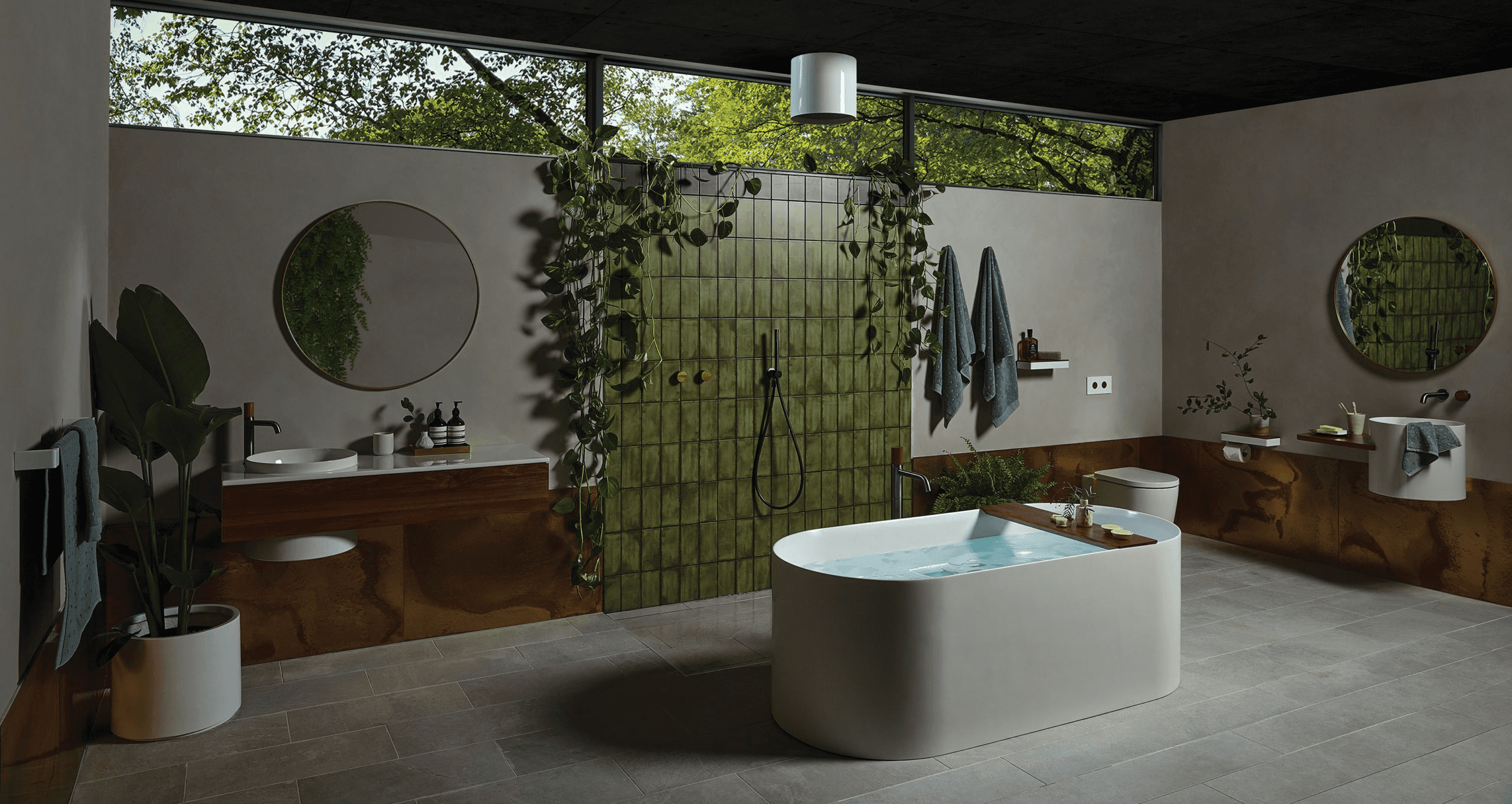
Winner of a Good Design Award, the Premium Elvire Collection by Caroma was a true collaboration
Discover how Evostyle partnered with Caroma to create the award-winning Elvire bathroom collection featuring bespoke timber components.
Discover how Evostyle partnered with Caroma to create the award-winning Elvire bathroom collection featuring bespoke timber components.

The real cost of overseas manufacturing
Uncover the hidden costs and quality issues of overseas furniture manufacturing versus the value of local Australian craftsmanship and collaboration.
Uncover the hidden costs and quality issues of overseas furniture manufacturing versus the value of local Australian craftsmanship and collaboration.
Discover what’s possible.
Send us your email address
to be kept informed.
ABN 27 947 460 969