Articles
Back
Understanding Man's Relationship with Nature
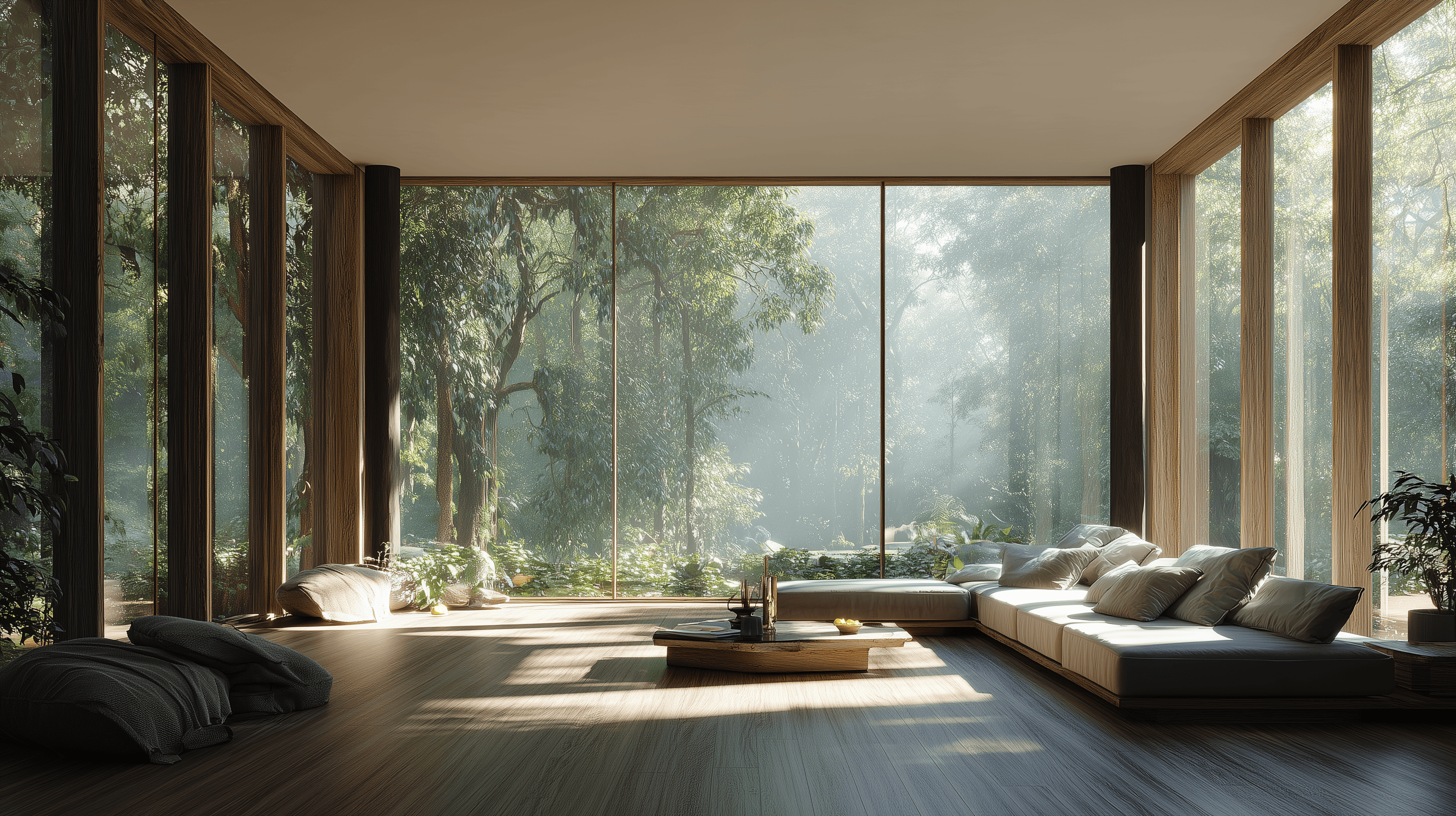
Architects are often driven by understanding their unique opportunity to have a positive impact on not only the environment, but on people's lives. They are acutely aware that the environments they create can directly influence the way people live, work and play. Now, as well as into the future.
Understanding this responsibility is important – and Architects know it. Increasingly they are engaging in the promotion of sustainable building practices and developing a strong awareness for Biophilic Design - a topic of interest for progressive Architects trying to design positive places for people to spend their time. However, before we delve into the technicalities of Biophilic Design, let's take a broader look at the relationship Man has with Nature. Understanding this will be of great benefit for designing places that can make people feel better – both mentally and physically.
As I write this, the world is grappling with the effects of Covid-19. It is a virus that has changed the world forever, and left millions worse for wear in terms of their individual and collective mental state. Hospitals have been pushed to the brink, and in many cases over it. People have developed depression, anxiety, loneliness, myopia, vitamin D deficiency and obesity under imposed laws to lock themselves away indoors for weeks if not months on end.
However there is accumulating evidence that the benefits of nature could help with the burden on our health services and foster improved social outcomes through nature by design. It is more important than ever for architects, policy maker and even individuals to understand this and make changes to benefit themselves and the world around them.
So, if Mankind is gradually losing the physical connection with nature as the world becomes more urbanised and digitally focussed, what are the key ideas Architects can understand to counteract this?
Understanding the relationship between nature and health
Understanding how design can impact and enhance this relationship
Include design elements that promote biophilic design principles
Biophilia & The Relationship Between Nature and Health
There are multiple studies reported on how people's health and wellbeing are impacted by their physical environment. However in essence all focuses on one or more of these three mind-body systems:
Cognitive
Psychological
Physiological
Cognitive Functioning and Performance
Cognitive functioning is essentially our ability to think, learn and respond both logically or creatively:
Attention
Perception
Memory
Mental agility
Thinking
Learning
For instance, directed attention is required for many day-to-day tasks in our daily work environments including decision making, reading, analysing, writing, organising, imputing data etc. It is energy intensive and can result in mental fatigue.
However, research has shown¹ that strong and routine connections with nature has a restorative effect on mental fatigue, providing a break for our higher cognitive functions. This results in regenerating fatigue cognitive resources, increasing our capacity to focus on tasks effectively once again.
Psychological Health and Wellbeing
Human psychological responses include:
Alertness
Attention
Concentration
Emotion
Mood
These psychological responses also include the positive responses to nature that helps manage stress and restore psychological balance. For instance studies have reported that great emotional restoration can be found when we connect with our natural environment. Through this connection we can experience reduced tension, anxiety, anger, fatigue and confusion as compared with urban environments devoid of characteristics of nature.
Physiological Health and Wellbeing
Human physiological responses are our physical responses to what we experience including:
Aural
Muscular
Respiratory
Overall physical comfort
Studies have shown that when humans experience the natural environment, they report responses such as the relaxation of muscles, lowering of blood pressure and stress hormone levels.²
Two Complementary Theories
There is much documented research available that shows that interacting with natural environments (compared to urban and heavily built up spaces) can have incredible benefits for mental health. These amazing effects of exposing oneself to nature include:
Improved mood³⁴⁵
Reduction in stress⁶
Improved concentration⁷
Improved working memory performance⁸⁹
Higher self esteem³¹⁰
Increased feelings of energy and vitality¹¹
Overall self-perceived feeling of health¹²
Two complementary theories that help support these findings are known as Biophilia Hypothesis (BH) and Attention Restoration Theory (ART).
BH emphasises the emotional connection between humans and nature, whereas ART focuses on the cognitive benefits that people experience when they interact with nature. Together, BH and ART offer complementary perspectives to explain why contact with nature might generate pleasurable and restorative psychological experiences.
Biophilia Hypothesis (BH)
The Biophilia Hypothesis states that humans are inherently attracted to the living and lifelike forms often encountered in natural environments.¹³ The term Biophilia was popularized by psychoanalyst Erich Fromm in the 1960's (from bio – meaning "life" and philia – meaning "love of"). It basically means humanity's innate tendency to be drawn towards nature, to feel an affinity for it, a love, a craving.¹⁴
Advocates of Biophilia Hypothesis argue that people have a genetically rooted need to connect with plants, animals and the natural environment which stems from our species evolution in biological – not artificial or manufactured – environments.¹⁵
Key Insight: Humans have an emotional affiliation to other living organisms. Peaceful elements in nature can help us cognitively and psychologically. Scientific research shows that time in nature reduces cortisol levels (stress hormone), lowers blood pressure and heart rate and builds ongoing immunity to these.
Attention Restoration Theory (ART)
Attention Restoration Theory (known as ART) was developed by Rachel and Stephen Kaplan in the early 1980s. As professors of psychology at the University of Michigan, they specialised in environmental psychology, and noticed that not only psychological distress was often related to mental fatigue, but psychological distress actually had a direct relationship to our surrounding environment.
ART argues that voluntary attention is a limited resource and when this cognitive energy flags, we begin to make mistakes.
This theory was developed and popularized by Stephen and Rachel Kaplan in the late 1980s and early 1990s, a time period characterized by rapid technological advancement and ever-increasing indoor entertainment.
Being in nature reduces the array of cognitive inputs that demand our attention in urban environments, thereby allowing us to think more clearly and restore cognitive energy.
Examples include:
Visual distractions from others
Sound distractions (digital technology, machinery etc.)
Ask yourself why Google's simple white home page is so popular... free from distractions, it allows users to focus on their search
The most restorative nature entices our attention but doesn't overexert it. For example, an ocean vista, a forest or a natural landscape. This is known as soft fascination.
This idea of attention restoration is supported by research which has linked exposure to nature with higher levels of creativity (measured by tests of convergent thinking).
Key Principles: Why Nature Makes Us Happier, Healthier and More Creative
In a wonderful book by Florence Williams¹⁶, it is demonstrated (and backed by many scientific studies) that there are five key reasons why nature has such a beneficial effect on humankind.
Peaceful elements of nature can help us cognitively and psychologically reducing stress, recharging our cognitive energy and enhancing creativity.
Mere smell, sound or sight of nature can change our brains and potentially improve health and educational outcomes.
The more time spent in nature, the greater the reported levels of wellbeing. Benefits include improved cognition and creativity, lower stress and anxiety, and lower blood pressure.
Ecotherapy (otherwise known as Nature Therapy) is having a positive effect on reducing symptoms of metal health problems such as depression, anxiety, PTSD and ADHD.
Understanding and including elements of nature in community areas within our growing urban environments is key to having a positive impact on people's lives.
Summary
We've probably all felt the restorative effects of nature on a day-to-day basis without even realising that it is a very scientific phenomenon. Science continues to provide evidence that Man has always had a close affinity with nature, even on a subconscious level.
Understanding and harnessing this force, is a great opportunity for all of us to help restore the wellbeing of mankind in this increasing urbanised and stressful environment in which we live.
References
¹ Kellert, S.F., J.H. Heerwagen, & M.L. Mador Eds. (2008). Biophilic Design: The Theory, Science & Practice of Bringing Buildings to Life. Hoboken, NJ: John Wiley & Sons. van den Berg, A.E., Y. Joye, & S. de Vries (2007). Health Benefits of Nature. In: L. Steg, A.E. van den Berg, & J.I.M. de Groot (Eds.), Environmental Psychology: An Introduction (47-56). First Edition. Chichester: WileyBlackwell. pp406.
² https://www.terrapinbrightgreen.com/wp-content/uploads/2014/09/14-Patterns-ofBiophilic-Design-Terrapin-2014p.pdf
³ J. Barton, J. Pretty - What is the best dose of nature and green exercise for improving mental health? A multi-study analysis. Environmental Science and Technology, 44 (2010), p. 3947
⁴ D.E. Bowler, L.M. Buyung-Ali, T.M. Knight, A.S. Pullin - A systematic review of evidence for the added benefits to health of exposure to natural environments. BMC Public Health, 10 (2010), pp. 1-10
⁵ D. Valtchanov, K.R. Barton, C. Ellard - Restorative effects of virtual nature settings. Cyberpsychology, Behavior, and Social Networking, 13 (2010), pp. 503-512
⁶ D. Villani, G. Riva - Does interactive media enhance the management of stress? Suggestions from a controlled study. Cyberpsychology, Behavior, and Social Networking, 15 (2011), pp. 24-30
⁷ M.G. Berman, E. Kross, K.M. Krpan, M.K. Askren, A. Burson, P.J. Deldin, ..., J. Jonides - Interacting with nature improves cognition and affect for individuals with depression. Journal of Affective Disorders, 140 (2012), pp. 300-305
⁸ R. Berto - Exposure to restorative environments helps restore attentional capacity. Journal of Environmental Psychology, 25 (2005), pp. 249-259
⁹ S. Kaplan - The restorative benefits of nature: Toward an integrative framework. Journal of Environmental Psychology, 15 (1995), pp. 169-182
¹⁰ J. Pretty, J. Peacock, M. Sellens, M. Griffin - The mental and physical health outcomes of green exercise. International Journal of Environmental Health Research, 15 (2005), pp. 319-337
¹¹ R.M. Ryan, N. Weinstein, J. Bernstein, K.W. Brown - Vitalizing effects of being outdoors and in nature. Journal of Environmental Psychology, 30 (2010), pp. 159-168
¹² O. Kardan, E. Demiralp, M.C. Hout, M.R. Hunter, H. Karimi, T. Hanayik, ..., M.G. Berman - Is the preference of natural versus man-made scenes driven by bottom–up processing of the visual features of nature? Frontiers in Psychology, 6 (2015)
¹³ E.O. Wilson, S.R. Kellert - The Biophilia Hypothesis. Island Press, Washington, DC (1995)
¹⁴ https://www.nytimes.com/2002/08/20/science/managing-planet-earth-essay-adoringnature-till-it-bites-us-in-the-back.html
¹⁵ S.R. Kellert - Building for life: designing and understanding the human-nature connection. Island Press, Washington, DC (2005) p.123
¹⁶ Florence Williams – The Nature Fix – Why Nature makes us Happier, Healthier and More Creative. 2017
Architects are often driven by understanding their unique opportunity to have a positive impact on not only the environment, but on people's lives. They are acutely aware that the environments they create can directly influence the way people live, work and play. Now, as well as into the future.
Understanding this responsibility is important – and Architects know it. Increasingly they are engaging in the promotion of sustainable building practices and developing a strong awareness for Biophilic Design - a topic of interest for progressive Architects trying to design positive places for people to spend their time. However, before we delve into the technicalities of Biophilic Design, let's take a broader look at the relationship Man has with Nature. Understanding this will be of great benefit for designing places that can make people feel better – both mentally and physically.
As I write this, the world is grappling with the effects of Covid-19. It is a virus that has changed the world forever, and left millions worse for wear in terms of their individual and collective mental state. Hospitals have been pushed to the brink, and in many cases over it. People have developed depression, anxiety, loneliness, myopia, vitamin D deficiency and obesity under imposed laws to lock themselves away indoors for weeks if not months on end.
However there is accumulating evidence that the benefits of nature could help with the burden on our health services and foster improved social outcomes through nature by design. It is more important than ever for architects, policy maker and even individuals to understand this and make changes to benefit themselves and the world around them.
So, if Mankind is gradually losing the physical connection with nature as the world becomes more urbanised and digitally focussed, what are the key ideas Architects can understand to counteract this?
Understanding the relationship between nature and health
Understanding how design can impact and enhance this relationship
Include design elements that promote biophilic design principles
Biophilia & The Relationship Between Nature and Health
There are multiple studies reported on how people's health and wellbeing are impacted by their physical environment. However in essence all focuses on one or more of these three mind-body systems:
Cognitive
Psychological
Physiological
Cognitive Functioning and Performance
Cognitive functioning is essentially our ability to think, learn and respond both logically or creatively:
Attention
Perception
Memory
Mental agility
Thinking
Learning
For instance, directed attention is required for many day-to-day tasks in our daily work environments including decision making, reading, analysing, writing, organising, imputing data etc. It is energy intensive and can result in mental fatigue.
However, research has shown¹ that strong and routine connections with nature has a restorative effect on mental fatigue, providing a break for our higher cognitive functions. This results in regenerating fatigue cognitive resources, increasing our capacity to focus on tasks effectively once again.
Psychological Health and Wellbeing
Human psychological responses include:
Alertness
Attention
Concentration
Emotion
Mood
These psychological responses also include the positive responses to nature that helps manage stress and restore psychological balance. For instance studies have reported that great emotional restoration can be found when we connect with our natural environment. Through this connection we can experience reduced tension, anxiety, anger, fatigue and confusion as compared with urban environments devoid of characteristics of nature.
Physiological Health and Wellbeing
Human physiological responses are our physical responses to what we experience including:
Aural
Muscular
Respiratory
Overall physical comfort
Studies have shown that when humans experience the natural environment, they report responses such as the relaxation of muscles, lowering of blood pressure and stress hormone levels.²
Two Complementary Theories
There is much documented research available that shows that interacting with natural environments (compared to urban and heavily built up spaces) can have incredible benefits for mental health. These amazing effects of exposing oneself to nature include:
Improved mood³⁴⁵
Reduction in stress⁶
Improved concentration⁷
Improved working memory performance⁸⁹
Higher self esteem³¹⁰
Increased feelings of energy and vitality¹¹
Overall self-perceived feeling of health¹²
Two complementary theories that help support these findings are known as Biophilia Hypothesis (BH) and Attention Restoration Theory (ART).
BH emphasises the emotional connection between humans and nature, whereas ART focuses on the cognitive benefits that people experience when they interact with nature. Together, BH and ART offer complementary perspectives to explain why contact with nature might generate pleasurable and restorative psychological experiences.
Biophilia Hypothesis (BH)
The Biophilia Hypothesis states that humans are inherently attracted to the living and lifelike forms often encountered in natural environments.¹³ The term Biophilia was popularized by psychoanalyst Erich Fromm in the 1960's (from bio – meaning "life" and philia – meaning "love of"). It basically means humanity's innate tendency to be drawn towards nature, to feel an affinity for it, a love, a craving.¹⁴
Advocates of Biophilia Hypothesis argue that people have a genetically rooted need to connect with plants, animals and the natural environment which stems from our species evolution in biological – not artificial or manufactured – environments.¹⁵
Key Insight: Humans have an emotional affiliation to other living organisms. Peaceful elements in nature can help us cognitively and psychologically. Scientific research shows that time in nature reduces cortisol levels (stress hormone), lowers blood pressure and heart rate and builds ongoing immunity to these.
Attention Restoration Theory (ART)
Attention Restoration Theory (known as ART) was developed by Rachel and Stephen Kaplan in the early 1980s. As professors of psychology at the University of Michigan, they specialised in environmental psychology, and noticed that not only psychological distress was often related to mental fatigue, but psychological distress actually had a direct relationship to our surrounding environment.
ART argues that voluntary attention is a limited resource and when this cognitive energy flags, we begin to make mistakes.
This theory was developed and popularized by Stephen and Rachel Kaplan in the late 1980s and early 1990s, a time period characterized by rapid technological advancement and ever-increasing indoor entertainment.
Being in nature reduces the array of cognitive inputs that demand our attention in urban environments, thereby allowing us to think more clearly and restore cognitive energy.
Examples include:
Visual distractions from others
Sound distractions (digital technology, machinery etc.)
Ask yourself why Google's simple white home page is so popular... free from distractions, it allows users to focus on their search
The most restorative nature entices our attention but doesn't overexert it. For example, an ocean vista, a forest or a natural landscape. This is known as soft fascination.
This idea of attention restoration is supported by research which has linked exposure to nature with higher levels of creativity (measured by tests of convergent thinking).
Key Principles: Why Nature Makes Us Happier, Healthier and More Creative
In a wonderful book by Florence Williams¹⁶, it is demonstrated (and backed by many scientific studies) that there are five key reasons why nature has such a beneficial effect on humankind.
Peaceful elements of nature can help us cognitively and psychologically reducing stress, recharging our cognitive energy and enhancing creativity.
Mere smell, sound or sight of nature can change our brains and potentially improve health and educational outcomes.
The more time spent in nature, the greater the reported levels of wellbeing. Benefits include improved cognition and creativity, lower stress and anxiety, and lower blood pressure.
Ecotherapy (otherwise known as Nature Therapy) is having a positive effect on reducing symptoms of metal health problems such as depression, anxiety, PTSD and ADHD.
Understanding and including elements of nature in community areas within our growing urban environments is key to having a positive impact on people's lives.
Summary
We've probably all felt the restorative effects of nature on a day-to-day basis without even realising that it is a very scientific phenomenon. Science continues to provide evidence that Man has always had a close affinity with nature, even on a subconscious level.
Understanding and harnessing this force, is a great opportunity for all of us to help restore the wellbeing of mankind in this increasing urbanised and stressful environment in which we live.
References
¹ Kellert, S.F., J.H. Heerwagen, & M.L. Mador Eds. (2008). Biophilic Design: The Theory, Science & Practice of Bringing Buildings to Life. Hoboken, NJ: John Wiley & Sons. van den Berg, A.E., Y. Joye, & S. de Vries (2007). Health Benefits of Nature. In: L. Steg, A.E. van den Berg, & J.I.M. de Groot (Eds.), Environmental Psychology: An Introduction (47-56). First Edition. Chichester: WileyBlackwell. pp406.
² https://www.terrapinbrightgreen.com/wp-content/uploads/2014/09/14-Patterns-ofBiophilic-Design-Terrapin-2014p.pdf
³ J. Barton, J. Pretty - What is the best dose of nature and green exercise for improving mental health? A multi-study analysis. Environmental Science and Technology, 44 (2010), p. 3947
⁴ D.E. Bowler, L.M. Buyung-Ali, T.M. Knight, A.S. Pullin - A systematic review of evidence for the added benefits to health of exposure to natural environments. BMC Public Health, 10 (2010), pp. 1-10
⁵ D. Valtchanov, K.R. Barton, C. Ellard - Restorative effects of virtual nature settings. Cyberpsychology, Behavior, and Social Networking, 13 (2010), pp. 503-512
⁶ D. Villani, G. Riva - Does interactive media enhance the management of stress? Suggestions from a controlled study. Cyberpsychology, Behavior, and Social Networking, 15 (2011), pp. 24-30
⁷ M.G. Berman, E. Kross, K.M. Krpan, M.K. Askren, A. Burson, P.J. Deldin, ..., J. Jonides - Interacting with nature improves cognition and affect for individuals with depression. Journal of Affective Disorders, 140 (2012), pp. 300-305
⁸ R. Berto - Exposure to restorative environments helps restore attentional capacity. Journal of Environmental Psychology, 25 (2005), pp. 249-259
⁹ S. Kaplan - The restorative benefits of nature: Toward an integrative framework. Journal of Environmental Psychology, 15 (1995), pp. 169-182
¹⁰ J. Pretty, J. Peacock, M. Sellens, M. Griffin - The mental and physical health outcomes of green exercise. International Journal of Environmental Health Research, 15 (2005), pp. 319-337
¹¹ R.M. Ryan, N. Weinstein, J. Bernstein, K.W. Brown - Vitalizing effects of being outdoors and in nature. Journal of Environmental Psychology, 30 (2010), pp. 159-168
¹² O. Kardan, E. Demiralp, M.C. Hout, M.R. Hunter, H. Karimi, T. Hanayik, ..., M.G. Berman - Is the preference of natural versus man-made scenes driven by bottom–up processing of the visual features of nature? Frontiers in Psychology, 6 (2015)
¹³ E.O. Wilson, S.R. Kellert - The Biophilia Hypothesis. Island Press, Washington, DC (1995)
¹⁴ https://www.nytimes.com/2002/08/20/science/managing-planet-earth-essay-adoringnature-till-it-bites-us-in-the-back.html
¹⁵ S.R. Kellert - Building for life: designing and understanding the human-nature connection. Island Press, Washington, DC (2005) p.123
¹⁶ Florence Williams – The Nature Fix – Why Nature makes us Happier, Healthier and More Creative. 2017
Biophilia and the Senses
How smell, sound and sight connect us to nature. Learn the science behind phytoncides, birdsong benefits, and healing views in biophilia.
How smell, sound and sight connect us to nature. Learn the science behind phytoncides, birdsong benefits, and healing views in biophilia.
Sustainable timber - an environmental ally
Discover how sustainable timber in construction can reduce carbon emissions and combat climate change. Learn about Evostyle's eco-friendly practices.
Discover how sustainable timber in construction can reduce carbon emissions and combat climate change. Learn about Evostyle's eco-friendly practices.

The real cost of overseas manufacturing
Uncover the hidden costs and quality issues of overseas furniture manufacturing versus the value of local Australian craftsmanship and collaboration.
Uncover the hidden costs and quality issues of overseas furniture manufacturing versus the value of local Australian craftsmanship and collaboration.
Discover what’s possible.
Send us your email address
to be kept informed.
ABN 27 947 460 969